
| Feature | PERC | Hydrocarbon Solvent |
|---|---|---|
| Fabric Safety | Medium (can weaken fibres) | High — very gentle |
| Environmental Impact | High | Low |
| Odour | Strong chemical smell | Mild or odourless |
| Safe for Embellishments | Risky | Safe |
| Regulation | Banned/Restricted in many regions | Globally accepted |
Dry-Cleaning Solvents Explained: Perc vs Hydrocarbon
A complete 2026 guide explaining the two major dry-cleaning solvents — Perc and Hydrocarbon — how they work, where Perc is banned, and why eco-conscious cleaners like Greendhobi use safer hydrocarbon-based solvents.
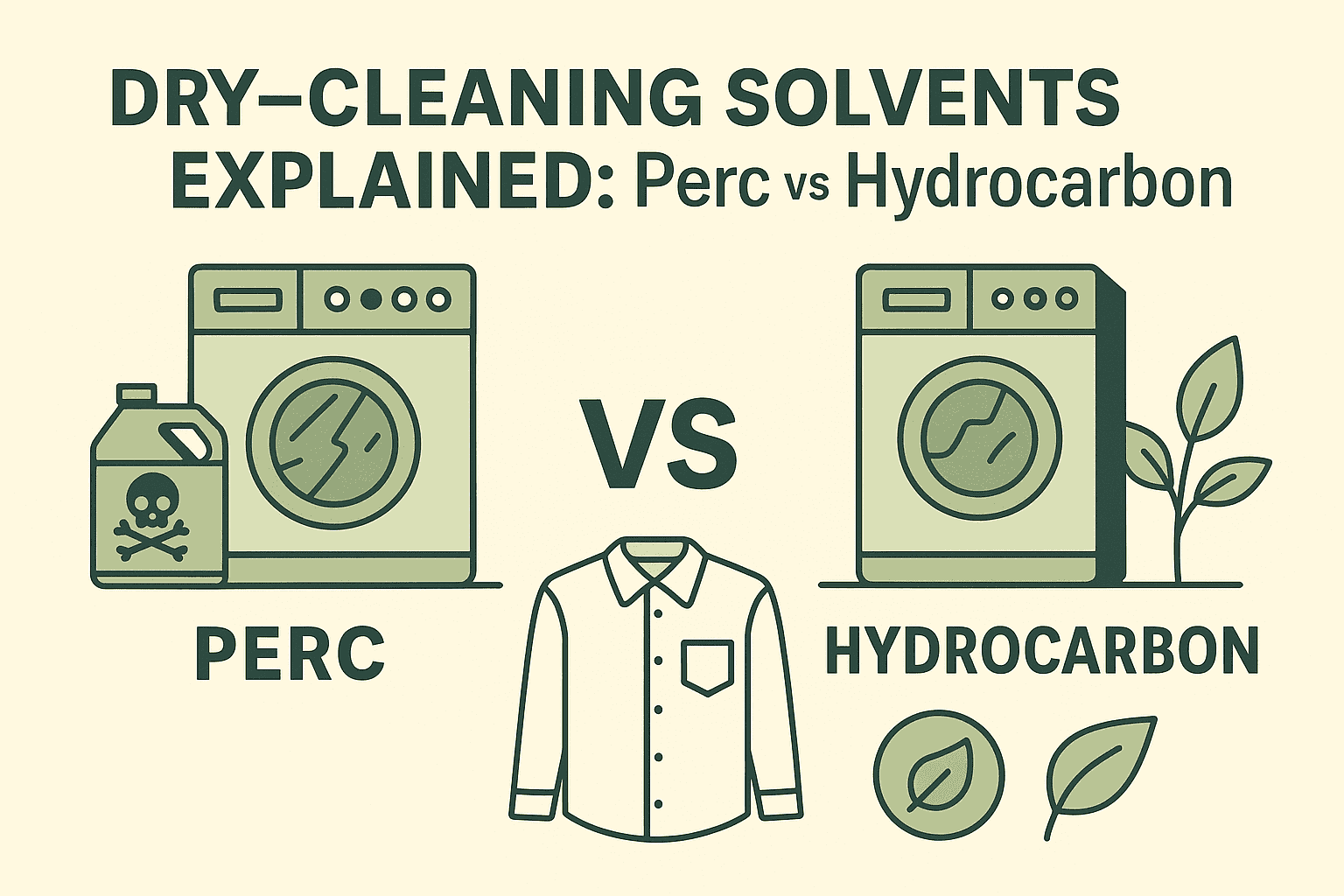
Dry-Cleaning Solvents Explained: Perc vs Hydrocarbon
Dry-cleaning is more than just “cleaning without water.” Behind the scenes, the real difference comes from the solvent used to remove oil, sweat, makeup and tough stains without damaging fabric.
In 2026, two major solvent types dominate the industry: Perchloroethylene (Perc) and Hydrocarbon-based solvents. But they are not equal. This guide explains how each works.
What Exactly Is a Dry-Cleaning Solvent?
A solvent is the liquid used in dry-cleaning machines to dissolve stains that water cannot remove — such as oil, grease, sebum, perfume, deodorant marks, ink and makeup.
Unlike water, solvents do not cause:
- shrinking
- fading
- texture changes
- wool felting
That’s why dry-cleaning is essential for:
- business formals
- wool, silk, linen
- embellished garments
- designer / premium clothing
- delicate partywear
The Two Main Dry-Cleaning Solvents
1. Perchloroethylene (PERC)
Perc is the traditional dry-cleaning solvent used since the 1940s. It is a powerful degreaser, but comes with several health, environmental and fabric-related drawbacks.
- Harsh chemical smell
- Can weaken delicate fabrics over time
- Known to cause colour dullness in repeated cleaning
- Produces chemical residue on clothing
- Listed as a toxic air pollutant in many regions
Perc has been restricted or banned in:
- California — full ban in 2023
- European Union — severely restricted
- Japan — limited use under strict regulations
- Canada — phase-out from residential buildings
“Perc remains effective, but its environmental and fabric risks have pushed the industry toward safer alternatives.”
2. Hydrocarbon-Based Solvents
Hydrocarbon solvents are modern, fabric-safe alternatives created to replace Perc. They are gentler, environmentally safer and ideal for premium garments.
- Gentle on fibres — no shrinking or weakening
- No harsh smell
- Safe for embellishments (sequins, beads, zari)
- Better colour retention
- Lower toxicity compared to Perc
Hydrocarbon solvents remove:
- oil & grease stains
- collar grime
- deodorant marks
- makeup stains
- perfume residue
Perc vs Hydrocarbon: Clear Comparison
Our Hydrocarbon Process Includes:
- Low-toxicity, eco-safe solvents
- RO-purified water for pre-treatment cycles
- Fabric-wise cleaning (wool, silk, linen, synthetics)
- Gentle drying at controlled temperatures
- Steam finishing for crisp, fresh results
This ensures:
- longer garment life
- better colour brightness
- no chemical smell
- safe cleaning for premium luxury wear
“Every solvent used at Greendhobi is selected to protect your clothing — and the environment.”
When Should You Choose Hydrocarbon Dry Cleaning?
Hydrocarbon dry cleaning is ideal for garments that need gentle yet deep cleaning:
- Designer or luxury items
- Embellished wedding/partywear
- Premium shirts & suits
- Wool, linen, silk
- Clothes damaged by traditional dry-cleaning
The Bottom Line
Greendhobi uses hydrocarbon-based dry-cleaning solvents to deliver a safer clean, better fabric care, and an eco-friendly process designed for modern, premium garments.
Further Reading
If you’re interested in how Greendhobi approaches fabric care and sustainability beyond dry cleaning, these articles may be helpful:
Further Reading
For additional perspectives on dry-cleaning solvents, environmental health and safer alternatives, check out these resources:
- Perchloroethylene and Dry Cleaning: It’s Time to Move the Industry to Safer Alternatives — A 2021 scientific review on PERC risks and alternative solvents.
- Dry Cleaning (Wikipedia) — Overview of dry-cleaning methods and solvents like PCE and hydrocarbons.
Fast, eco-friendly laundry — at your doorstep
Schedule pickup and get your garments back within 24–48 hours.