
| Fabric | Shrinkage Risk | Reason |
|---|---|---|
| Cotton | High | Absorbs water & relaxes quickly |
| Wool | Very High | Scales lock when heated & agitated |
| Rayon/Viscose | High | Weak wet strength → shape distortion |
| Polyester | Low | Heat-set synthetic fibres |
Why Do Clothes Shrink After Washing? Causes & Prevention
A complete 2026 guide explaining why clothes shrink after washing — scientific reasons, fabric behavior, temperature effects, and proven ways to prevent shrinkage at home.
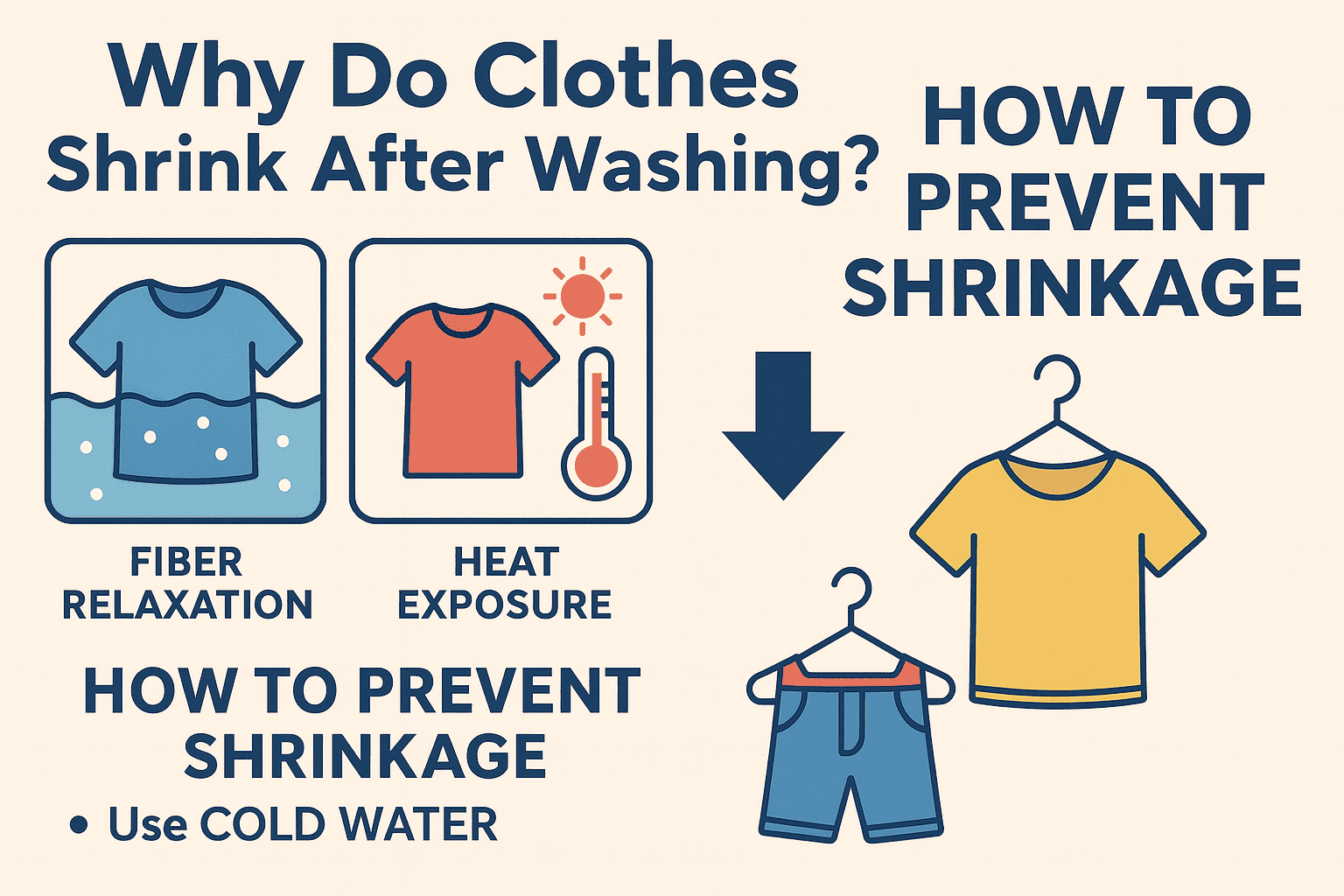
Why Do Clothes Shrink After Washing?
Shrinking is one of the most common laundry frustrations. Shirts tightening, t-shirts becoming shorter, trousers losing length — it happens to everyone. To fix it, we first need to understand what really causes shrinkage.
What Actually Makes Clothes Shrink?
Most shrinkage comes from three scientific reasons: fiber relaxation, heat exposure, and mechanical stress. Let’s break them down clearly.
1. Fibre Relaxation Shrinkage
During manufacturing, fibres are pulled, stretched, and tensioned to give garments structure. When washed, these fibres absorb water and return to their natural relaxed state — causing visible shrinkage.
- Happens mostly during the first 1–3 washes
- Common in cotton, linen, rayon, viscose
- Can cause up to 5–10% size reduction
2. Heat-Induced Shrinkage
Heat is the fastest way to shrink clothes. High temperature washes or tumble drying tighten fibres aggressively, especially in natural fabrics.
- Boiling or hot water cycles shrink cotton & wool quickly
- High dryer heat causes irreversible contraction
- Printed t-shirts get shorter and tighter
3. Mechanical Shrinkage (Movement Stress)
Inside a washing machine, aggressive rotation, agitation, or high spin speeds can distort fabric shape.
- Knit fabrics tighten due to over-agitation
- Delicate fabrics stretch and then rebound smaller
- Heavy loads increase mechanical friction
Which Fabrics Shrink the Most?
How to Prevent Clothes from Shrinking
Shrinkage can be largely avoided with a few simple laundry adjustments.
- Use cold water instead of warm/hot cycles
- Select gentle or delicate mode
- Never tumble dry cotton, rayon, wool, or premium wear
- Do not overload the washing machine
- Air dry on a flat surface for delicate garments
How to Fix Minor Shrinkage (If It Already Happened)
Most mild shrinkage can be reversed using stretching and conditioning:
- Soak the garment in lukewarm water + conditioner
- Gently stretch the fabric back to shape
- Air dry flat while maintaining tension
Comparison: Hot Wash vs Cold Wash Shrinkage
| Condition | Hot Water | Cold Water |
|---|---|---|
| Shrinkage Risk | Very High | Low |
| Fabric Wear | Faster weakening | Longer garment life |
| Colour Protection | Poor | Good |
Does Greendhobi Help Prevent Shrinkage?
Yes — our controlled-temperature processes are specifically designed to avoid shrinking, colour fading, and fibre stress.
- RO-water washing prevents fibre tightening
- Strict temperature control for fabric-safe cleaning
- No harsh tumble drying
- Gentle, garment-aware wash cycles
Your clothes maintain shape, fit, and softness — wash after wash.
The Bottom Line
Clothes shrink mainly due to heat, agitation, and fibre relaxation. With a few preventive steps — and fabric-safe cleaning — shrinkage can be avoided almost completely.
Fast, eco-friendly laundry — at your doorstep
Schedule pickup and get your garments back within 24–48 hours.